
Ready before the cameras are.
The first hour of a crisis shapes the story people remember. We help you prepare, respond with speed and accuracy, and protect the reputation you’ve built.
The first hour
sets the story.
A crisis can now start with a bystander’s phone video or a fake clip that looks real. Within hours it’s on social media and in the news, and AI tools can keep repeating it for years. Silence lets someone else tell your story, but a fast mistake is remembered longest. The goal is to be first with what you know is true.
Support at every stage of a crisis.
Prepare
Be ready before anything happens.
- Crisis communications plans
- Holding statements and key messages
- Spokesperson media training
- Manager and front-line training
- Crisis simulations and tabletop exercises
Respond
Senior counsel when it counts.
- Rapid-response guidance
- Statements, talking points and FAQs
- Media inquiry management
- Employee and stakeholder communications
- Social media and misinformation response
Recover
Rebuild trust and learn from it.
- Post-crisis review
- Plan and training updates
- Reputation recovery through earned media, content and AI and search visibility
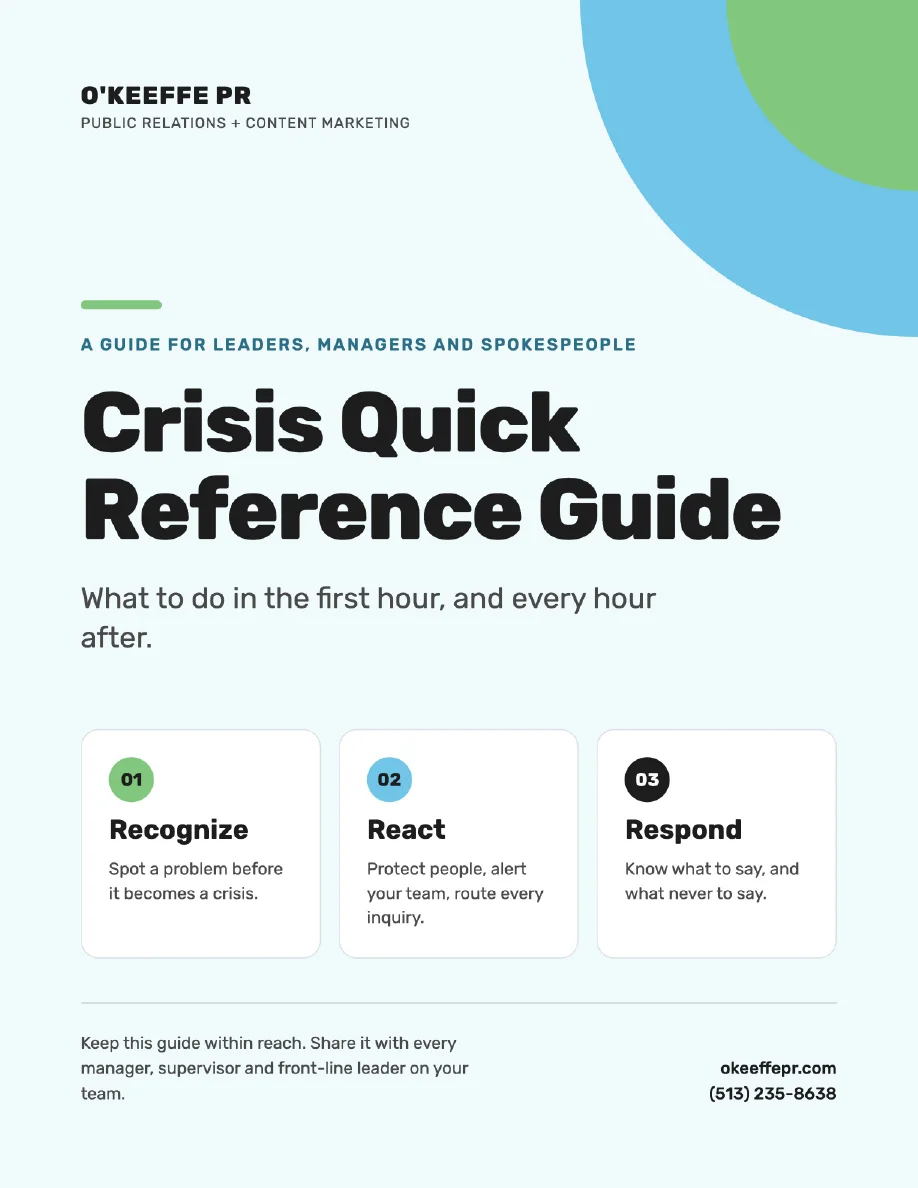
Keep this within reach.
Our free Crisis Quick Reference Guide covers what to do in the first hour, what to say when a reporter calls and how to write a holding statement in minutes. Share it with every manager on your team.
Experienced counsel when it counts.
30+ years of media experience.
We know how reporters work and how a story takes shape.
Senior-level guidance.
You work directly with experienced counselors, not junior staff.
Response and recovery under one roof.
PR, content, social media and AI and search visibility on one team, so rebuilding starts the moment the crisis ends.
FAQ’s
Common questions about crisis preparation, media response and protecting your organization’s reputation.
What should a crisis communications plan include?
Your crisis team and their roles, an approval process for statements, current contact lists, clear escalation steps, a first-hour checklist and prepared messages for likely scenarios.
How quickly should we respond?
Within the first hour, acknowledge the situation, show concern, share confirmed facts and say when you’ll update next. Being fast and wrong is worse than being slightly slower and right.
Should our CEO always be the spokesperson?
Not always. The executive closest to the issue is often more credible. What matters most is that spokespeople are named and trained in advance.
Can you help if we're already in a crisis?
Yes. Call (513) 235-8638 and we’ll step in quickly.
The best time to prepare is before you need to.
Let’s talk about where you stand today and what it will take to be ready.